KAUST-Aramco Collaboration Advances Ensemble-Based Reservoir Calibration from Research to Production Deployment
A collaboration with Aramco’s Upstream Digital Center has advanced ensemble-based reservoir model calibration and history matching methods from academic research into production deployment.
About
A multi-year collaboration between the Stochastic Numerics Research Group at King Abdullah University of Science and Technology and Aramco’s Upstream Digital Center has advanced ensemble-based reservoir model calibration and history matching methods from academic research into production deployment, supporting faster and more reliable subsurface model updates.
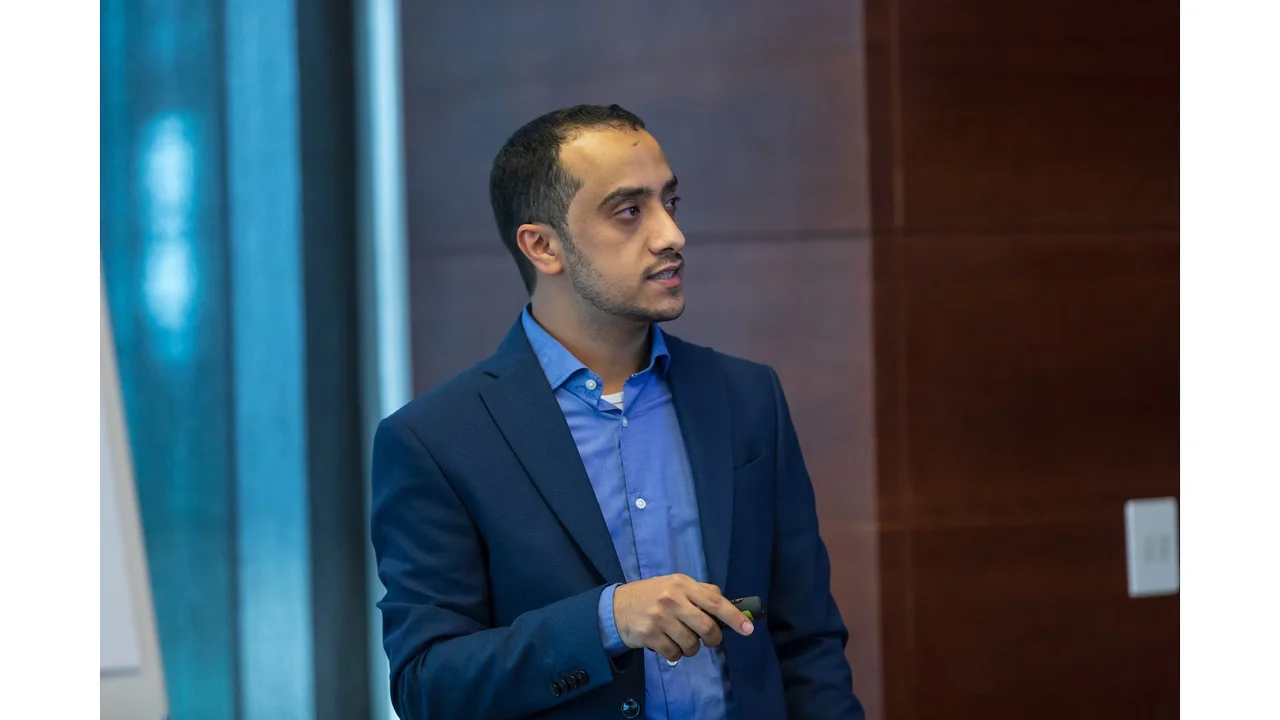
The collaboration began during the 2018–2021 period through the work of Dr. Zaid Sawlan, first as a PhD student and later as a postdoctoral researcher under Prof. Raul Tempone at KAUST, in close collaboration with Dr. Ali Alturki and his team at Upstream Digital Center. During this period, the joint effort focused on developing advanced ensemble-based workflows for history matching, uncertainty quantification, and computational reservoir-model calibration, with the objective of improving both the accuracy and efficiency of subsurface model updates.
The collaboration also created value through joint scientific publications and intellectual-property development, demonstrating how industry-academic partnerships can generate both peer-reviewed research outcomes and deployable technologies. KAUST contributed deep expertise in stochastic numerics, uncertainty quantification, and ensemble-based algorithms, while Aramco provided the operational reservoir-engineering environment, field-scale challenges, and deployment pathway needed to translate research into engineering practice.
The resulting capability has since evolved beyond its research foundations into an operational history matching suite integrated with Aramco numerical simulators and deployed within Upstream Digital Center engineering environment. This integration enables reservoir and petroleum engineers to apply advanced calibration workflows directly within routine field-development and production-analysis activities.
By moving from academic research to production deployment, the initiative demonstrates how sustained collaboration between industry and research institutions can deliver practical digital tools for upstream operations. It also highlights the growing role of ensemble-based computational methods in helping engineers reduce subsurface uncertainty, accelerate model calibration, and strengthen decision-making across complex reservoir assets.
Related People
Related Researchers

Zaid Sawlan
- Postdoctoral Research Fellow, Stochastic Numerics Research Group